
PSP Cargo Group Romania news
Blog
Rail freight under pressure: How logistics companies adapt to market conditions in 2026
The rail freight industry across Europe enters 2026 in a period of considerable economic and operational pressure. Transport operators must navigate a complex environment shaped by geopolitical tensions, fluctuating market demand, and increased pricing pressure across supply chains.
For companies active in rail logistics and freight transport, the challenge lies in maintaining efficiency and reliability while adapting to changing market conditions.
In a recent discussion, Kinga Mădărășan, General Director of PSP Cargo Group Romania, shared insights into how logistics operators are responding to these challenges and what strategies help maintain stability in uncertain times.
Economic Pressure Across the Logistics Sector
According to Kinga Mădărășan, the logistics industry continues to operate in an environment influenced by both economic and geopolitical developments.
Companies across Europe are facing increased uncertainty as global supply chains adjust to political tensions and market volatility.
“2026 remains a difficult year from an economic perspective,” she explains. “There are many external factors influencing the logistics sector, including geopolitical tensions and changes in international trade dynamics.”
These factors affect freight flows, operational costs, and long-term planning for transport companies.
Pricing Pressure from Both Directions
One of the most immediate challenges for rail freight operators is the pressure placed on pricing structures.
Many companies across different industries are reviewing their logistics costs and requesting lower transport tariffs from operators. At the same time, suppliers within the logistics chain are adjusting their own service prices due to rising operational costs.
This situation places transport operators in a difficult position.
“Clients are asking for tariff reductions, while suppliers continue to adjust their prices upward,” says Kinga Mădărășan. “Rail freight operators must balance these pressures carefully in order to remain competitive.”
Managing this balance requires a combination of operational efficiency and strategic planning.
Improving Efficiency Within Existing Operations
To maintain financial stability in this environment, logistics companies increasingly focus on improving the efficiency of their operations.
Rather than relying solely on price adjustments, many operators are looking for ways to optimize existing resources.
At PSP Cargo Group, this means improving the utilization of wagons and transport flows. When wagons arrive at a destination after delivering cargo, they can sometimes remain unused before returning to their original loading point. By identifying opportunities to reload these wagons for additional transport routes, operators can increase efficiency.
“We try to create additional transport volumes using the same wagons,” explains Kinga. “If a wagon can be repositioned and loaded again after unloading, we improve efficiency and reduce unnecessary empty movements.”
This strategy allows rail freight operators to maintain competitiveness while controlling operational costs.
The Importance of Integrated Logistics
Another important strategic direction for rail freight companies is the development of integrated logistics services.
Transport operations rarely depend on a single mode of transport. Instead, efficient supply chains often require coordination between rail transport, road freight, and storage infrastructure.
PSP Cargo Group operates within a broader logistics network that includes several operational resources:
- the truck fleet of Waberer’s Group,
- logistics terminals and operational hubs,
- storage locations within the wider group structure,
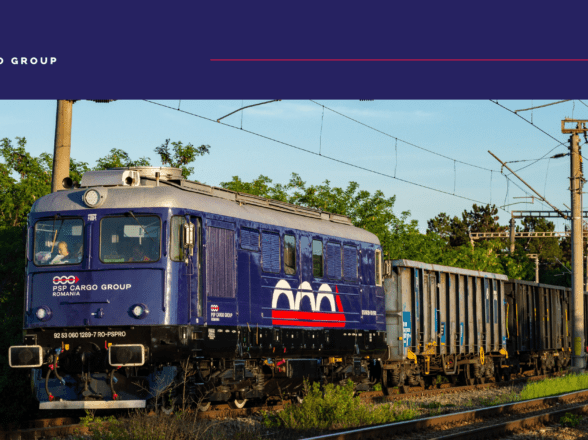
- a modern locomotive fleet,
- and partnerships with rail operators across Europe.
By connecting these capabilities, the company can provide integrated logistics solutions that combine multiple transport modes.
“Our goal is to connect the available resources and create efficient logistics chains,” says Kinga Mădărășan.
Long-Term Partnerships Provide Stability
Despite market volatility, long-term business relationships remain a key factor in maintaining stability.
Many of PSP Cargo’s clients have worked with the company for years, creating partnerships built on reliability and operational trust.
During periods of economic pressure, collaboration becomes even more important.
“We work closely with our partners to find solutions that allow us to maintain cooperation and transport volumes,” Kinga explains.
For rail freight companies across Europe, these relationships provide an important foundation for navigating uncertain markets.



Recent Comments