
PSP Cargo Group Romania news
Blog
Rail vs Road Freight in Romania: When Rail Wins (2026 Guide)
If you move grain, aggregates, fertiliser, metals or chemicals in Romania, you’ve probably compared rail and road freight more than once. Trucks are easy to book, flexible and go door to door. Rail can look complicated at first, with wagons, sidings, train paths and new documents.
Yet for the right volumes and distances, rail is cheaper, safer and more predictable than road. The hard part is knowing where that line sits for your business. This guide walks through the main factors, so you can decide on facts rather than habits and answer the questions you might have about rail vs road freight in Romania.
Cost per tonne: why volume changes everything
The biggest difference in rail vs road freight is how much one unit can carry.
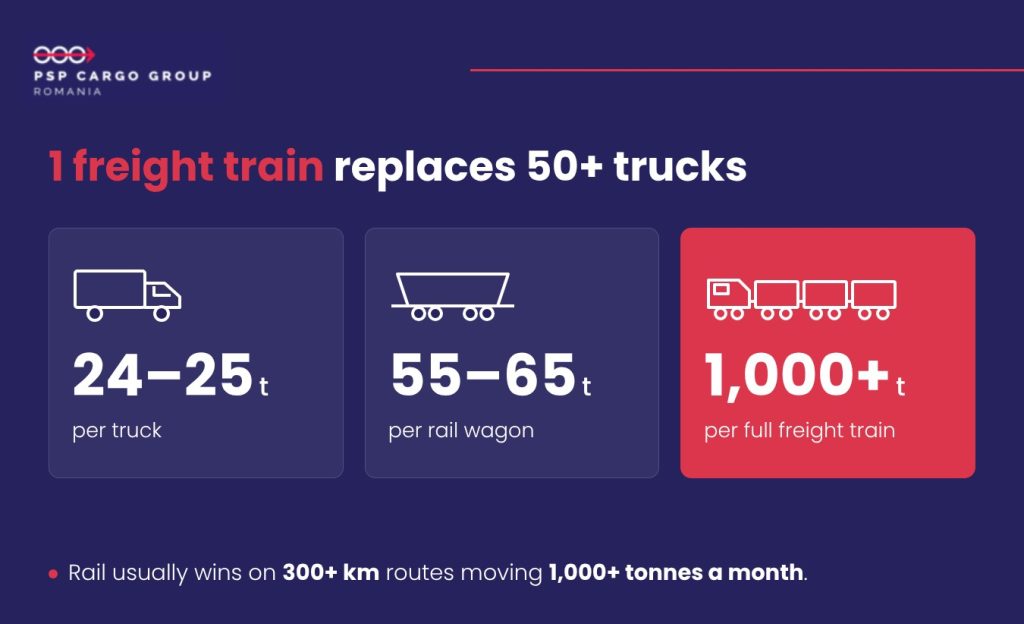
A standard 40-tonne truck carries about 24–25 tonnes of payload. One rail wagon carries roughly 55–65 tonnes, depending on the wagon type and the axle-load limit of the line. A full train of 20–25 wagons can move well over 1,000 tonnes in one go. That single train replaces 50 or more trucks.
Every truck needs its own driver, fuel, tolls, insurance and maintenance. A train spreads one crew and one locomotive across the whole load. So the more tonnes you move at once, the lower your cost per tonne.
That’s why rail is especially strong for:
– steady flows, where the same route runs every week or month
– bulk goods such as grain, oilseeds, fertiliser, coal, aggregates and wood
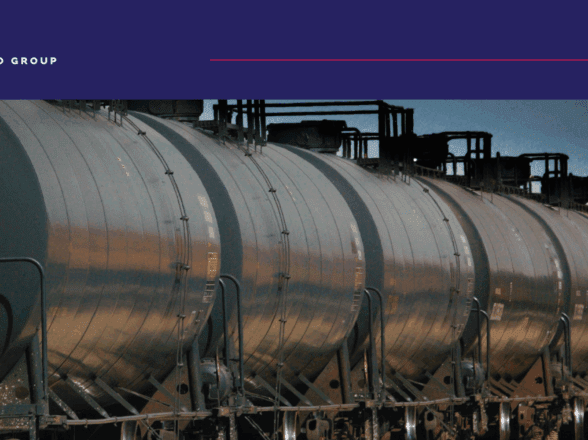
– liquids and gases carried in tank wagons, such as fuels and chemicals
– heavy goods such as steel coils, pipes and machinery
The distance and volume where rail wins
There is no single break-even point for rail vs road freight. It depends on your cargo, your loading points, the route and how often you ship. But some rules of thumb hold well in practice:
| Situation | Usually the better choice |
| Under 150 km, small or irregular loads | Road |
| 150–300 km, regular loads of a few hundred tonnes | Depends on sidings and loading costs: compare both |
| Over 300 km, regular flows of 1,000+ tonnes a month | Rail |
| Cross-border routes in Central and Eastern Europe | Rail, especially for bulk and hazardous goods |
| Private sidings at both ends | Rail, almost always |
The last row matters most. Over short distances, the costs of rail come mostly from handling: moving goods by truck to a terminal, transferring them to wagons, and doing the same at the other end. If your plant or warehouse has its own siding, or sits close to a rail terminal, most of that extra handling disappears and rail becomes competitive much sooner.
If you don’t have a siding, it’s still worth checking. Many industrial areas in Romania have sidings that are unused or shared, and a terminal close to your site may be enough.
Reliability and capacity
Romania, like much of Europe, is short of professional truck drivers. The shortage is worst in peak seasons such as the grain harvest, when everyone needs trucks at the same time. Road rates can rise sharply in those weeks, and some loads simply don’t get collected on time.
This is where rail vs road freight differs most: rail capacity is planned in advance. It is planned in advance. Once your wagons and train paths are booked, your volume moves regardless of what’s happening on the road. Rail is also less affected by traffic jams, weekend driving bans for heavy vehicles, border queues for trucks and road works.
Rail has delays too. Romania’s network is in the middle of a major rebuild, and track works on CFR lines bring speed limits and closures. The difference is that a good operator knows where the works are, plans routes around them and tells you early when transit times change.
Safety
For hazardous goods, rail is one of the safest ways to transport them. Trains run on a separate network, away from passenger cars and town centres, and every party follows the strict RID rules for dangerous goods.
Fewer trucks on the road also means fewer accidents involving your cargo, lower insurance risk, and less risk to your company’s reputation.
Sustainability and emissions
On emissions, rail vs road freight isn’t even close: rail emits far less CO₂ per tonne-kilometre. On electrified lines the difference is even larger.
This matters more each year. Large customers, banks and EU rules increasingly ask companies to report the emissions of their supply chains. Moving a heavy, regular flow from road to rail is one of the fastest ways to cut transport emissions without changing what you produce.
Rail vs road freight: When road still wins
Rail isn’t the answer for everything. Road is usually the better choice when:
- loads are small, urgent or irregular
- the distance is short and there is no siding or terminal nearby
- the cargo has many different delivery points
- delivery windows are very tight and change often
Many companies end up using both. They send the long, heavy part of the journey by rail and use trucks for the last few kilometres. This combined approach often gives the best mix of cost and flexibility.
How to compare rail and road properly
When you compare rail vs road freight quotes, look at the total cost per tonne delivered, not just the freight rate. The factors include:
- transport from loading point to delivery point
- loading and unloading costs
- any truck legs to or from a terminal
- storage, if needed
- the cost of delays, such as production stops or penalties from customers
In most rail vs road freight comparisons, rail looks more expensive on the freight rate alone but cheaper on the total cost, once reliability and capacity are counted.
How PSP Cargo Group helps you decide
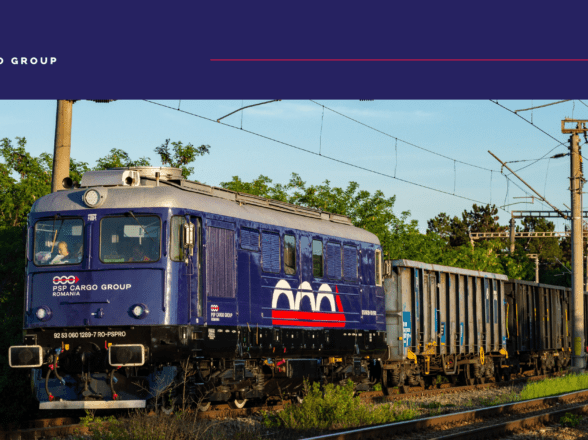
PSP Cargo Group runs its own electric and diesel locomotives with its own crews, so we don’t depend on third-party carriers. Together with PSP Hungary and the wider PETROLSPED group, we move bulk, chemical and hazardous cargo across Central and Eastern Europe.
We also offer shunting, loading and unloading, storage and help with permits. That means you deal with one partner from the moment goods are loaded until they’re delivered.
If you’re not sure how rail vs road freight works out for your business, we’ll tell you straight. Read how we cut transit times by up to 2 days on cross-border routes, or see what our customers say.
Send us your route, cargo type and monthly volume. We’ll come back with a rail quote you can compare line by line with your current road cost.




Recent Comments